
books
Soundtrack Inspired by the Book
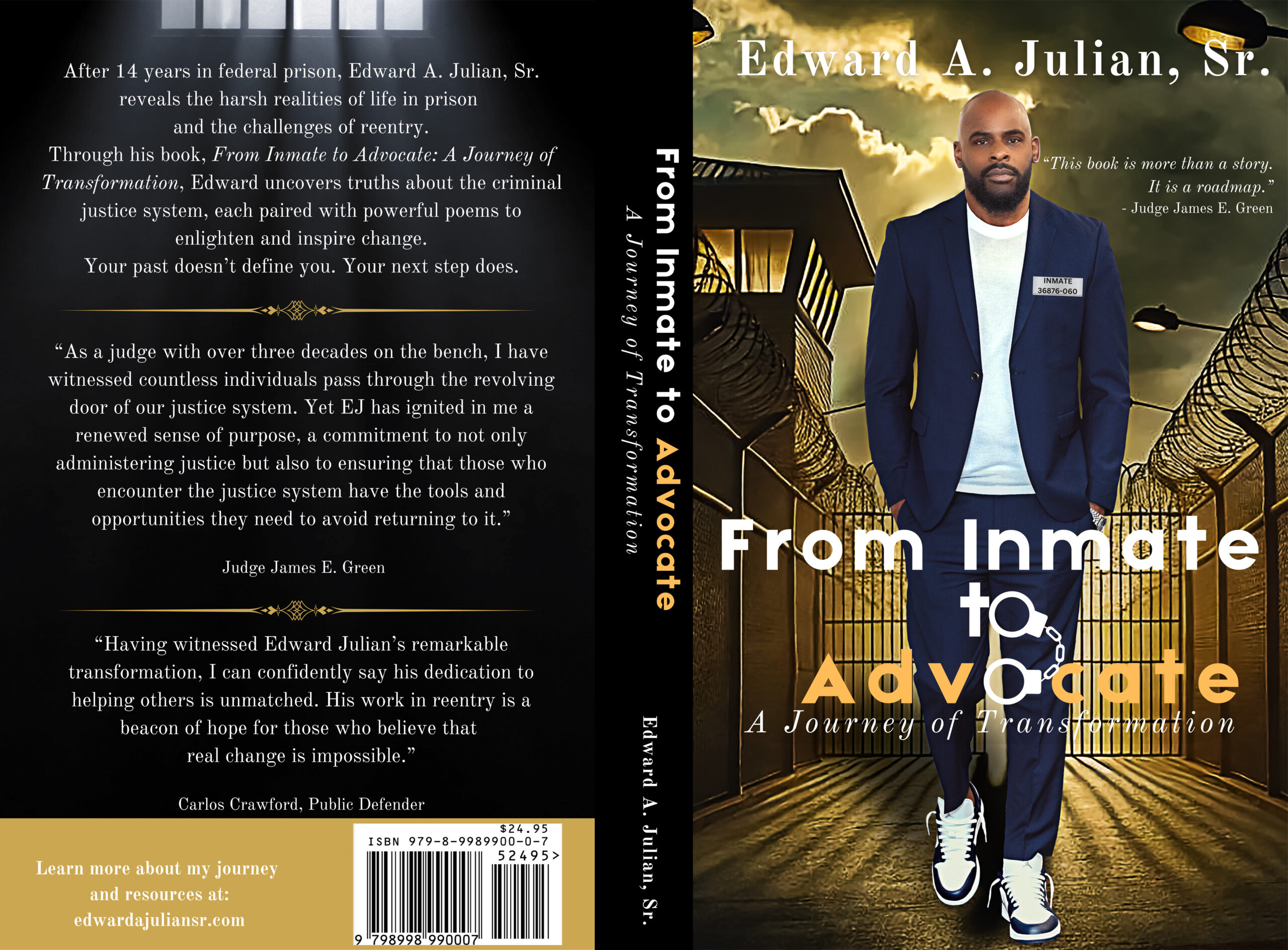
The music from From Inmate to Advocate: A Journey of Transformation brings the story to life in another form. Each song reflects themes from the book—choices, accountability, identity, and transformation.
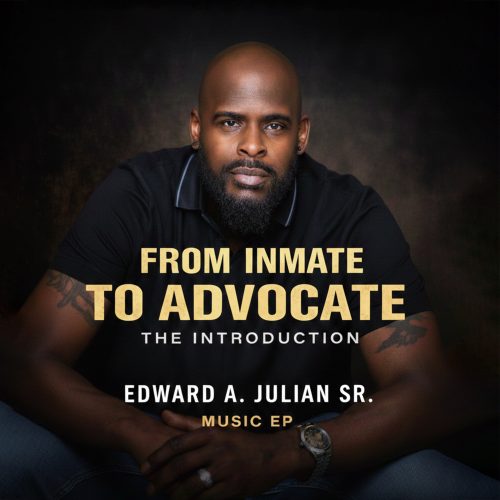
Music inspired by the book
From Inmate to Advocate: A Journey of Transformation
Edward A. Julian, Sr.
Available March 20, 2026
Track List
- Today I Ask
- The Heart of A Man
- 10/5 The Code We Live By
Witnessing Transformation
“As a judge with over three decades on the bench, EJ has ignited in me a renewed sense of purpose—a deeper commitment to not only administering justice but also to ensuring that those who encounter the justice system have the tools and opportunities they need to build a better future and avoid returning to it.”
— Judge James E. Green, Franklin County Municipal Court of Ohio
“Your past doesn’t define you. Your next step does.” — Edward A. Julian, Sr
Your past doesn’t define you. Your next step does.
The Journey Behind the Book
This book was written in confinement, finished in freedom, and earned through survival.
It didn’t begin at a desk or in an office. It began in a prison cell — with a pen, paper, and determination. There was no computer, no editor, and no safety net. Only the urgency to write before the moment passed.
I wrote until my fingers swelled, blistered, and bled. When the pain became unbearable, I wrapped my finger in toilet paper, taped it, and kept going. Stopping was never an option. The vision refused to let me quit.
Afterward, the manuscript sat untouched for thirteen years — not because it lacked importance, but because survival came first. I came home and went straight to work rebuilding what incarceration had taken. I worked in reentry, helped others find their way back, and spent over a decade proving myself through consistent effort. Life demanded everything I had, and I gave it.
Still, the story never left me.
When I picked it back up, the weight returned immediately. Writing meant reliving the isolation, the trauma, and the realities that don’t disappear with time. The process reopened wounds I thought had healed. It became so heavy that I returned to therapy just to continue.
This book took everything out of me — yet quitting was never an option.
Finishing wasn’t about completing a project. It was about reclaiming my story. I searched for the right people, paid the cost of that search, and faced setbacks, broken promises, and lost time. But I kept going.
Two people stood with me throughout this journey. My wife, Giena, steady and unwavering. And Anne Larson, my trusted counselor, who — though we’ve never met in person — offered clarity and guidance when I needed it most. Their support carried me through moments when quitting felt easier.
Many nights, sleep wouldn’t come. My mind raced with ways to make this story stronger and more honest. So I wrote.
After years of persistence, revisions, and faith, this book is finally ready.
It’s more than pages and ink.
It’s proof that your past doesn’t have the final say.
I didn’t just write this book.
I survived it.
And now, I place it in your hands.
Excerpt from the Book:
The guard’s hands moved over me, checking every pocket and seam, before waving me through the metal detector. “Take off your boots,” he ordered, nodding at the steel-toed footwear we were required to wear in the UNICOR factory. I slipped them off and watched as he banged them against the ground, checking for anything hidden inside. The sound echoed sharply in the small hallway, a reminder of the humility forced upon me, the pain of confinement, the anger of being stripped of dignity, and the frustration of knowing how far I’d fallen from the life I once knew. Once I cleared the metal detector, I slipped the boots back on and stepped into the factory with a few other guys starting that day. We were the new labor, handed over to a system that didn’t care about our past or our future. An inmate walked over to us, his movements casual but quick. He nodded and said, “What’s up?” His tone was relaxed, but his eyes darted around the room. The conversation started with the usual questions: “Where are you from? What unit are you in? How much time did you get?” It was small talk, nothing deep. Just as one of the guys was answering, a commotion broke out about ten feet away. Two inmates were arguing, their voices low but intense. Before anyone could intervene, one of them threw a hot cup of coffee he was holding in the other man’s face, jumped on the long wooden table that was used to place the items worked on in the warehouse, and kicked the guy in the face as he sat in the chair at his workstation.